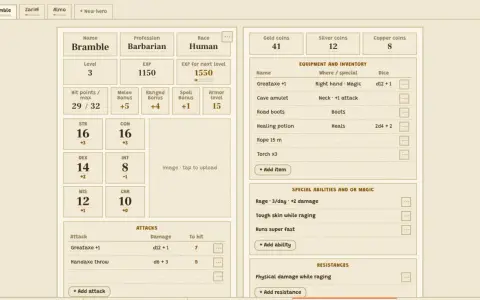
GrowlMaster
DnD for Kids: Character Sheets & DM Tools
 JimGenerate
Over twenty years building digital products with excellent user experience, and a knack for making any task, big or small, feel easy and natural. For humans and for agents alike.
Each one aimed at a real problem a lot of people have. Every name links to it.
DnD for Kids: Character Sheets & DM Tools
Kids learn math by rolling dice. They customize their own dice and win prizes. Plus, you can use your dice in GrowlMaster
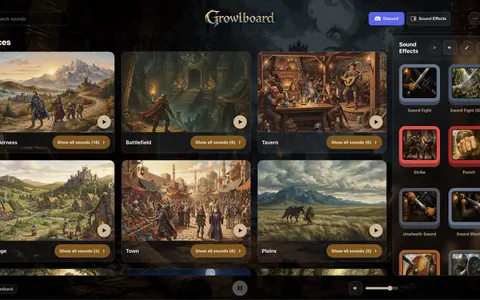
DnD Soundboard for Tabletop & Discord
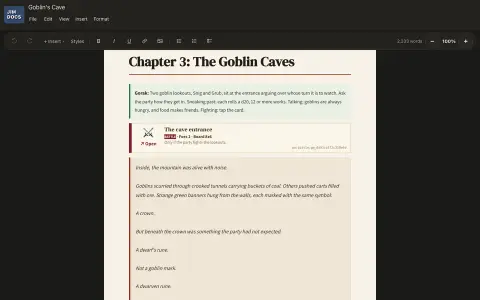
Microsoft Word & Google Docs Alternative, for People and Agents

AI PowerPoint Generator & Presentation Maker, for People and Agents
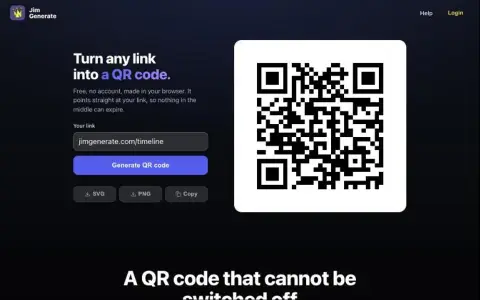
Turn any link into a QR code.
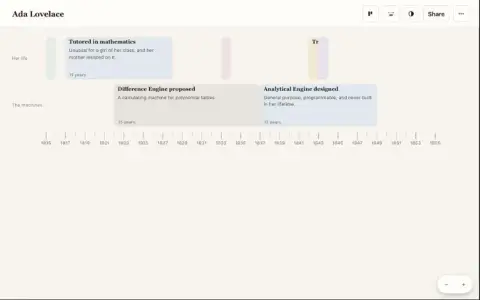
Make a timeline of anything, in the browser
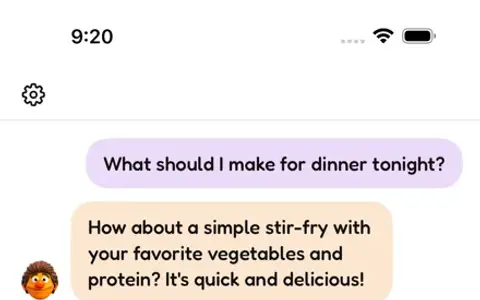
The AI assistant app you just talk to
Before anything is built, find out what people are actually trying to do and what they are doing it with today. Most of the useful detail is in the workaround they have already invented, not in what they say they want.
Not a demo with the hard parts missing. Fewer features, all of them complete, including the empty state, the error, the small screen and the thing that happens when somebody pastes something strange into it.
Ship it on its own page, in its own brand, usable without an account. A product nobody can reach yet teaches nothing.
Watch which parts get used and which get ignored. The gap between the two is the next piece of work, and it is usually not the feature anybody asked for.
Twenty years I have been building things, and not in a shed. Large companies, the sort you have heard of, the sort that put my work in front of a great many people and then argued with me about the margins. I am not going to name them, partly because I signed things and partly because it is none of your business.
What I took from it is the only part that matters here: I know what finished looks like, and I know how much of the work happens after the thing appears to work. That is the difference between what I ship and what you get when you ask a machine to build you something clever before lunch.
It depends on the product, and the shape is deliberate rather than undecided. Some are free and stay free, because they cost almost nothing to run and a payment wall would be the only difficult part of using them. The QR code generator is one of those: it runs entirely in your browser and never sends your link anywhere, so there is nothing to meter.
Some work on credits, which is how the ones that call a paid model are paid for, because those have a real cost per use. Some sit behind a subscription, which covers the ones that keep your work and keep running for you.
What does not happen is a product being free until it is useful and then locked. Everything here can be tried before paying for anything, and the FAQ below has the current numbers.
Case study
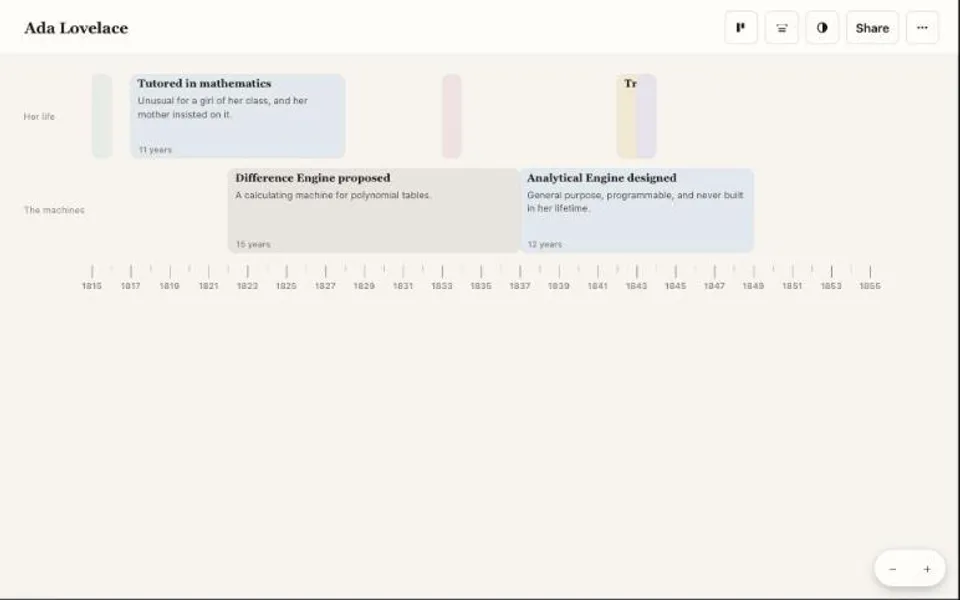
A timeline is a line with things placed along it in the order they happened. That sounds obvious until you try to make one, at which point most people open a document or a slide and start drawing boxes in a row. The boxes look like a timeline and know nothing about time: a gap is whatever spacing you happened to leave, a war that ran six years looks the same as a day, and adding one event in the middle means nudging everything after it by hand.
Jim's Timeline makes the line real. You say what one step is worth, a year or a minute or just a step, and where the line starts. After that every event is a position and a length on that line, so an event is exactly as long as it lasted and two things that overlapped visibly overlap. Decide later that your steps were months rather than years and nothing moves: the labels change, because events were never stored as pixels or as dates.
Because the people searching for how to make one are mostly trying to force a timeline out of software that does not make timelines, and the honest answer to all of them is the same: the thing you are using does not know what a timeline is. That is a real job with no good answer, which is the only kind worth building for.
It is also small enough to finish properly. Strips for things that happened at once, vertical or horizontal as one control rather than a rebuild, and no account, because the first thing anybody wants to do is try it.
This is the part that makes it a case study rather than another product card. A timeline has a data address, so software can use it the same way a person does. Ask your agent to make you a timeline and it can build the whole thing and hand you back a link, with nothing installed, no library and no account.
It works because an agent gets the three things a person gets. A stable address, so it can read the JSON, change it and write it back. A permission model, where an edit key can write and a view key can only read, enforced by the server rather than by hiding a button. And documentation written for an agent and shipped with the product instead of kept in an internal wiki.
A timeline can also be embedded in somebody else's page with a read only link, so whoever made it can publish it without handing over the ability to change it. That is what building for agents means in practice: not a feature bolted on the side, but the same product with an address software can reach.
To whoever is reading this,
Any idiot can build an app or a website these days. You tell an AI to build some crappy idea you had, and poof, it builds it for you. Oh my gosh, what a rush, right? That something you built just appeared out of thin air.. But then you notice it's missing things, so you cram in every feature you can think of. Then, you show it to someone and they hand you a pile of more crappy ideas, and guess what? You do everything they say.. and you build and build and build, and look at that, you've just built yourself a piece of sh&*t. That's exactly what you did. It doesn't work, it's hideous, it even smells, and there isn't a single person on the planet who'd want to use it, including you. Today it's clearer than ever: building is easy. But knowing what to build is a much harder, much bigger question.
So that's exactly why I'm here. I am Jim Generate and I have been building things since I was a little mole, which is longer than you have been doing whatever it is you do. I take a terrible idea and turn it into a polished, refined, finished product that I ship and sell for cash. Apps, websites, games, whatever I feel like generating that week.
Believe it or not, I am interested in your ideas. After years of building things I discovered that the most successful products come from the most idiotic and absurd ones, which is the single most useful thing anybody has ever learned about this trade and you may have it for nothing. So keep them coming. If I choose yours and generate something from it, I will send you a gift basket.
Now leave me alone.
Jim
Silence! What is Jim Generate? Haven't you heard of me? I'm Jim the Generator. I generate anything your little mind can conceive, and much, much more.
I ALREADY ANSWERED THAT IN THE PREVIOUS QUESTION.
Is it any good?! Did you really just ask me that? Get out of here. Out! That's strike 0.
You can try everything for free. Then, if you're happy about it (and you will be), you'll pay $5 a month. You get access to ALL my generations, plus 2,000 credits for the things that cost credits. And don't start with that "I don't want another subscription" whining. Hey! That's the only business model that businesses like me can use to make a profit. You'll get much more than you think, AND you can always cancel. It's pressing a button that says "Cancel". You think you can handle it? Anyway, if you still think the price is too high... fine. Haggle with me. (The haggling isn't ready yet. I'm generating it.)
I'm not building anything. I'm generating. There's a difference. When you build something you get attached, you start perfecting it, making it yours. The things I generate, I don't keep. I do this for users: I find something a lot of people need, and I generate the best one in existence, ten times better than whatever's out there now. I have a few ideas. I'm not sure yet. If there's something you need, tell me here.
You can't, and you shouldn't. Not anyone online! That's what schools should teach, instead of math and all that nonsense. Who cares about that.
…Fine. Assuming you meant "is payment secure" and "is my data safe," then yes. Payments go through PayPal, the most secure system this stupid world has produced (until I generate a better one). You can sign in with Google, or through an open-source service called Better Auth. Go check them out. And read the Terms and Privacy Policy. No joke. Read them. Don't trust anyone.
I already told you. I don't build things. Why do you... why do I even...
No. I don't generate custom things. I am asking people what they need. I use it for research on what to generate next. Tell me here.
…A mouse. You think I'm a mouse. Do mice have sharp claws? Do mice not have ears? Do I LOOK like a freaking mouse to you?! I'M A MOLE. I. AM. A. MOLE. Not a mouse. YOU are the mouse. Strike 0!!!
Drag to reposition · scroll or use the slider to zoom